4.8 Trusted Shops 22.167 reviews
Free Shipping from 149,-
1,000,000+ satisfied customers preceded you
Celebrating our 10th anniversary this year
Free Shipping from 149,-
4.8 Trusted Shops 22.167 reviews
Free Shipping from 149,-

What is the difference between porcelain and earthenware?

What is the difference between porcelain and earthenware?
Unsure between porcelain and earthenware? Think about how you set your table: sleek and modern or warm and rustic.
What is porcelain?

What is porcelain?

Porcelain is made from kaolin, a fine white type of clay, and is fired at very high temperatures (above 1200°C). Because of that high temperature the material becomes very hard, dense and non-porous. You can see that in the final result:

porcelain is lightweight, thinly formed and has a smooth, glossy surface.

If you hold a very thin porcelain plate up to the light, you can sometimes see your hand through it. That's a classic sign of quality porcelain.

What is earthenware?

What is earthenware?

Earthenware is made from ordinary clay and fired at lower temperatures, usually between 900 and 1150°C. The result is

a thicker, heavier material with a slightly porous structure. Because earthenware is naturally somewhat absorbent, it almost always gets a glaze. That glaze makes it watertight and gives it the matte or glossy finish you know from colorful, handcrafted plates and bowls. Earthenware has a warmer, earthy look and is popular in country and Mediterranean table styles.

And what about stoneware? That's a bit different

And what about stoneware? That's a bit different

Stoneware sits between earthenware and porcelain in terms of properties. It is fired at higher temperatures than earthenware, which makes it denser and sturdier. Stoneware is non-porous, so technically it doesn't need a glaze, although it usually gets one for the look. The material is robust, well suited to everyday use and feels solid in the hand. For those who like a handcrafted look but also value durability, stoneware is often the smartest choice.

How do you recognize the material?

How do you recognize the material?

  1. Weight: porcelain is light, earthenware and stoneware are heavier.
  2. Thickness: porcelain is thin and finely shaped, earthenware and stoneware are thicker with softer lines.
  3. Translucency: hold the plate up to the light. Porcelain lets light through, earthenware and stoneware do not.
  4. Color of the fracture edge: porcelain has a white, dense edge. Earthenware has a warmer, sometimes red or brown color on the unglazed side.
  5. Sound: tap the plate lightly with your nail. Porcelain sounds clear and high, earthenware gives a duller tone.
Practical use: what are the differences?

Practical use: what are the differences?

Porcelain is dishwasher-safe and hardly holds stains or odors thanks to its non-porous surface. It's ideal if you want your tableware to still look crisp and fresh after years. Earthenware and stoneware are also easy to care for if they're glazed, but beware: unglazed rims or spots can absorb moisture. Always check whether your tableware is dishwasher-safe, as this varies by product and brand.

Which material suits you?

Which material suits you?

Choose porcelain if you like a clean, timeless table. It's delicate, light and fits both modern and classic interiors. Feel free to serve an elaborate meal on it or use it every day, because good porcelain can last for decades. Choose earthenware or stoneware if you prefer warmth and character at the table. Those slightly irregular shapes and earthy colors give your table that cozy, personal atmosphere. Perfect for a long dinner with friends or a relaxed Sunday breakfast.

What does the color of your tableware say?

What does the color of your tableware say?

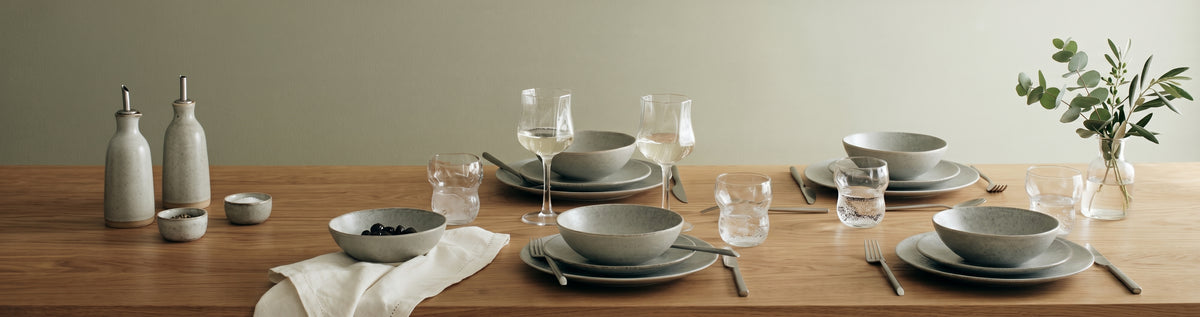
White is the best-selling color and for good reason. It's timeless, makes food look good and goes with everything. But there's so much more. Blue and green give a fresh, modern feel. Earth tones like ochre, terracotta and beige suit stoneware and earthenware perfectly and create a warm, country vibe. Want a bit more character? Handmade or reactive-glazed pieces with color variations are a great choice. No two plates are exactly the same.

The smart choice: think long-term

The smart choice: think long-term

You don't buy a dinner set every month. So choose something you'll still love and that will stand up to daily use. Check whether the tableware is dishwasher-safe and microwave-safe if that's important to you. And think about extras: can you buy individual plates or bowls later if one breaks? Good tableware doesn't have to be expensive, but it should do its job at your table for years to come.

Related products

Related howto's

Related recipes

Porcelain and earthenware are both ceramic materials, but they differ significantly in composition, appearance and use. Porcelain is harder, thinner and can let light through when very thin. Earthenware is thicker, heavier and has a warmer, more handcrafted look. Which material you choose depends on your table style, how you use it daily and how much maintenance you want to do.

At Cookinglife you'll find tableware in all kinds of materials, from fine porcelain to robust stoneware and colorful earthenware. Whether you're looking for a crisp white set for everyday use or an expressive collection for cozy dinners, there's always an option to suit your taste. Quality comes first, because good tableware lasts for years.